
We couldn't find any items in your cart.

Product is not available in this quantity.
Learn why professional driveway cleaning often looks more even than using a regular pressure washer wand, including surface cleaner patterns, concrete cleaning, streaks, overlap, rinsing and realistic results.
Get on the List!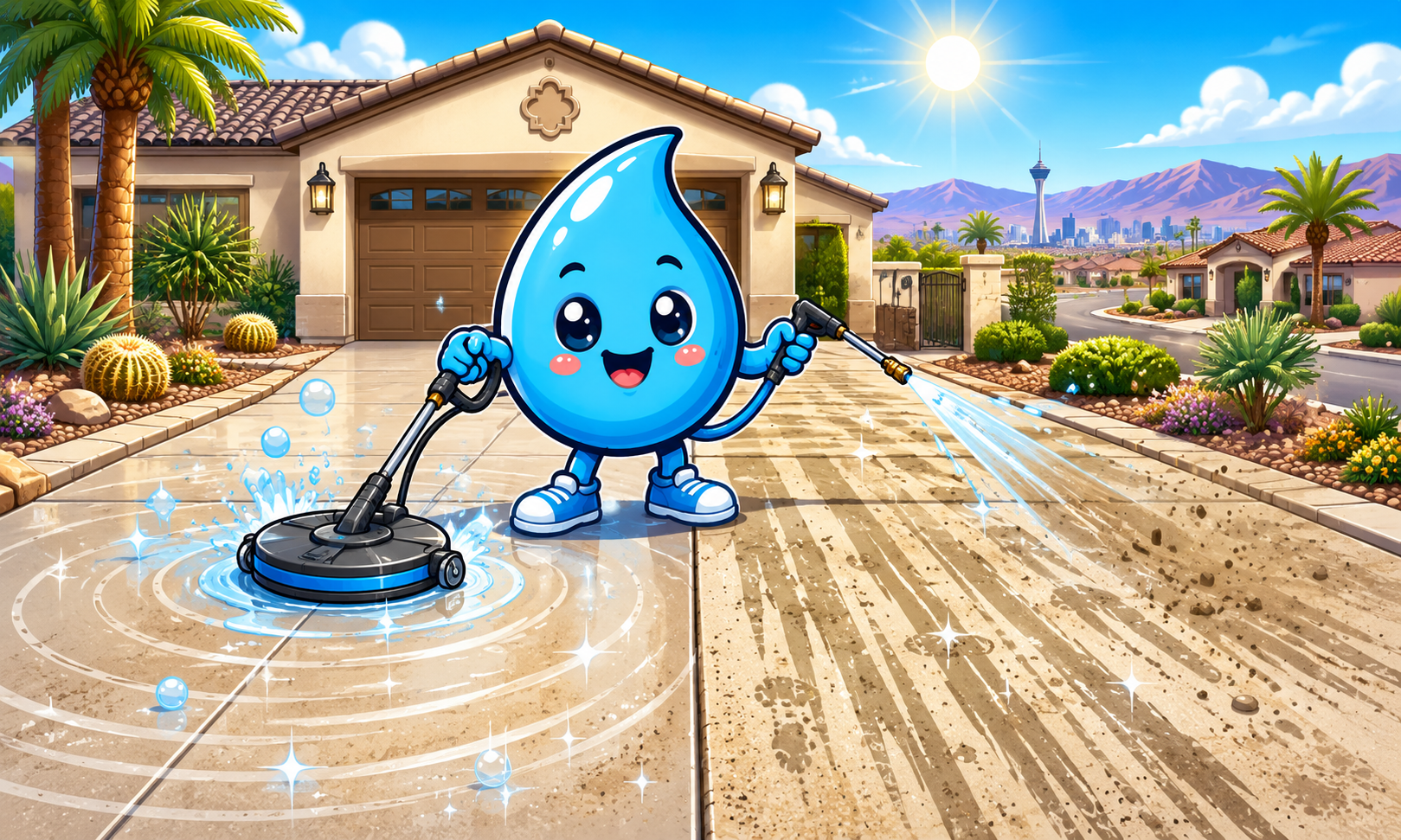
Quick answer: Professional driveway cleaning often looks more even because flat concrete is cleaned with a controlled, overlapping process instead of random wand passes. A regular pressure washer wand can leave stripes, missed areas, and uneven marks when the angle, distance, speed, or overlap changes. A surface-cleaner style approach helps create more consistent coverage on driveways, sidewalks, garage floors, patios, and other flat concrete areas.
If you have ever seen a driveway with bright lines, dark stripes, or patchy sections after someone pressure washed it, the problem is usually not just the pressure washer. It is often the method.
Driveway cleaning is not only about power. It is about even coverage, surface review, controlled movement, proper rinsing, edge work, water access, and realistic expectations for stains. This matters in Henderson because concrete often has desert dust, tire marks, oil drips, garage buildup, trash bin residue, and heat-baked stains that can make results look uneven if the cleaning is rushed.
This guide explains why professional driveway cleaning can look more even than using a regular pressure washer wand and what homeowners should know before cleaning concrete in Henderson.
A pressure washer wand concentrates water into a narrow cleaning path. That can work for edges, spot cleaning, detail rinsing, and small areas, but it can be difficult to keep perfectly even across an entire driveway.
If the wand gets too close, moves too slowly, changes angle, or overlaps unevenly, it can create visible lines. If it moves too fast or stays too far away, it may leave dirt behind.
This is one reason driveway cleaning should be planned as a full-surface service, not just a quick spray-down.
Henderson driveway cleaning
Join the Zippy Drip route list and include your ZIP code, driveway photos, water access, and any oil stains, tire marks, or concrete concerns you want reviewed.
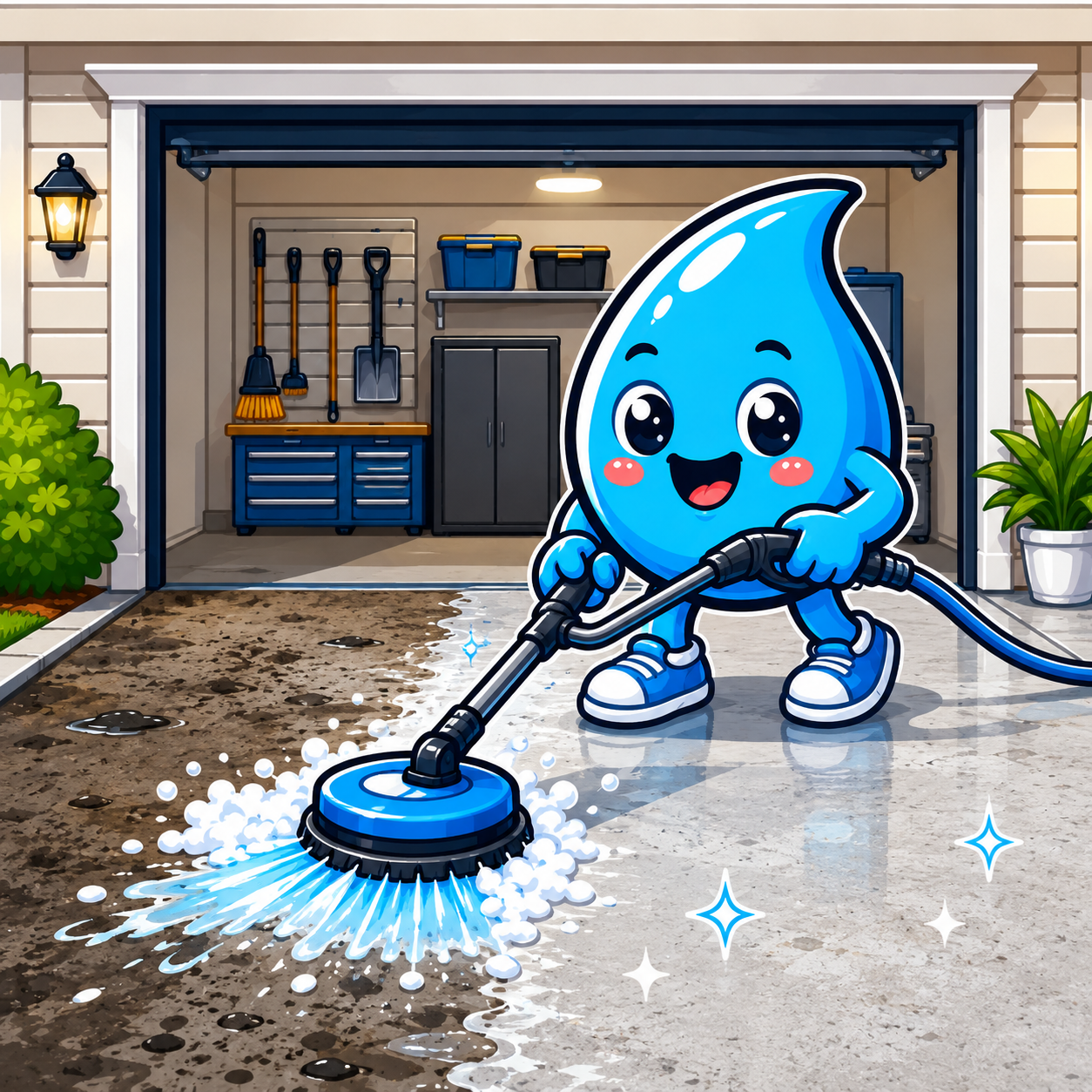
A surface cleaner is a flatwork cleaning tool designed for larger horizontal surfaces like driveways, sidewalks, patios, garage floors, and commercial walkways. Instead of cleaning a narrow line with a wand, it helps clean a wider area with a more controlled pattern.
For homeowners, the simple way to think about it is this: a wand is like drawing narrow lines across concrete, while a surface cleaner is meant to create more even coverage across flat areas.
A surface cleaner can help create a more even result, but it is not magic. The operator still has to move consistently, overlap correctly, rinse properly, and account for stains and concrete condition.
Professional driveway cleaning often looks better because the process is controlled from start to finish. The surface is reviewed, loose items are moved, water access is confirmed, stains are discussed, the main concrete area is cleaned evenly, and edges are rinsed afterward.
The most even-looking driveway cleaning usually comes from combining the right method with good preparation, not from simply using more pressure.
Neither tool is automatically better for every situation. The better option depends on the surface, the size of the area, the stain type, and what part of the job is being done.
| Cleaning area | Surface cleaner style approach | Pressure washer wand |
|---|---|---|
| Large driveway | Usually better for more even coverage | Can leave lines if used for the whole surface |
| Garage floor | Can help with flat open areas | Useful for edges, corners, and detail rinsing |
| Sidewalk or walkway | Good for consistent cleaning on flat sections | Useful around edges and transitions |
| Patio concrete | May work if the surface is durable and open | Useful near doors, furniture edges, and tight areas |
| Oil stain spot | Can clean the surrounding area evenly | May be used carefully for targeted attention |
| Edges and curb lines | May not reach every tight edge | Usually better for detailed rinsing and borders |
For large flat concrete areas, the most professional result often comes from using a broad, controlled cleaning method for the main surface and then using detail work for the edges and transitions.
Even when the cleaning method is good, concrete can still dry with some variation. That does not always mean the cleaning was done poorly. Sometimes the surface itself has permanent differences.
Henderson driveways are exposed to heat, sun, vehicle drips, tire marks, water runoff, desert dust, and daily use. Over time, concrete can develop color differences, porous areas, stains, repairs, or wear patterns.
The difference matters. A stain that remains because it is absorbed into the concrete is different from a stripe caused by uneven cleaning.
For stain expectations, see: Can Pressure Washing Remove Oil Stains, Tire Marks, and Desert Dirt from Concrete?
Overlap is one of the biggest reasons professional driveway cleaning can look more even. If each pass overlaps the last one correctly, the surface is less likely to have dark lines between passes.
If the passes are too far apart, the driveway can show lines. If the passes are too close or the speed changes too much, some areas may be cleaned more aggressively than others.
This is one reason driveway cleaning is more than just owning a pressure washer. The technique affects the finished look.
Even if the main driveway is cleaned evenly, the job can look unfinished if the edges are not rinsed properly. Dirt, foam, and loosened debris often collect along borders, cracks, curb lines, garage aprons, sidewalk transitions, and low spots.
Rinsing helps remove the loosened material so it does not dry back onto the surface.
For the full driveway cleaning process, read: What Happens During a Professional Driveway Cleaning in Henderson?
A surface cleaner can help clean the overall concrete more evenly, but it does not guarantee oil stain removal. Oil stains are a stain issue, not just a coverage issue.
Fresh oil spots may improve more noticeably than old oil stains. Older stains that have soaked into porous concrete may lighten but remain visible, even if the surrounding concrete looks cleaner.
This is why customers should share stain photos before the appointment. The cleaning method can improve the surface, but stain expectations should be discussed separately.
A DIY pressure washer can clean some driveway dirt, especially light surface dust and grime. The challenge is getting an even result across the whole surface without stripes, missed areas, or damage near sensitive edges.
DIY pressure washing can also take longer than expected because the wand cleaning path is narrow. Customers may start with one section, then realize the cleaned area is much brighter than the rest of the driveway, which forces them to keep going until the entire surface is evenly cleaned.
The bigger the surface, the more technique matters.
For Henderson driveways, a more even cleaning result usually comes from a combination of preparation, method, movement, rinsing, and realistic stain expectations.
If the driveway mostly has desert dust, loose dirt, and surface grime, the result may look noticeably brighter and cleaner. If it has old oil, rust, paint, chemical stains, tire transfer, or older concrete wear, the cleaning can still improve the overall look even if some marks remain.
That is why Zippy Drip focuses on explaining expectations before cleaning, not after.
Even the right cleaning method works better when the driveway is properly prepared. Vehicles should be moved, loose items should be cleared, water access should be confirmed, and stains should be mentioned before the appointment.
If the driveway is blocked by vehicles, planters, toys, bins, furniture, or storage items, the result can look incomplete because the surface was not fully accessible.
For a preparation checklist, read: How to Prepare for a Driveway Cleaning Appointment.
The same even-cleaning concept applies to garage floors, patios, sidewalks, and walkways. Flat concrete usually looks better when cleaned with controlled coverage and proper rinsing.
Garage floors may have oil stains, tire marks, storage marks, dust, and drainage limitations. Patios may have furniture, doors, screens, stucco, plants, and sealed surfaces nearby. Walkways may connect to landscaping, curb lines, and entry thresholds.
| Surface | Why even cleaning matters | Extra caution |
|---|---|---|
| Garage floor | Helps reduce patchy dust and tire mark patterns. | Storage items, oil stains, drainage, and garage seals. |
| Patio | Helps the space look cleaner and more usable. | Furniture, doors, stucco, screens, landscaping, and sealants. |
| Walkway | Helps improve entry path appearance. | Edges, plants, painted trim, and runoff direction. |
| Commercial sidewalk | Helps storefronts and entries look more maintained. | Customer traffic, glass doors, signs, keypads, and business hours. |
Equipment helps, but professional method is more than equipment. A driveway can still look bad if the operator rushes, skips edges, ignores stains, fails to rinse properly, or does not protect nearby surfaces.
A professional driveway cleaning process should include surface review, preparation, water access planning, method selection, controlled cleaning, edge rinsing, and a final walkthrough.
That process is what helps make the result look more complete and more trustworthy.
Professional driveway cleaning often looks more even than using a regular pressure washer wand because the cleaning is controlled across the full surface. A surface-cleaner style approach can reduce wand stripes and patchy results on large flat concrete areas, while detail rinsing helps clean edges, curb lines, garage aprons, and transitions.
A wand is still useful for edges and detail work, but using only a wand across an entire driveway can leave visible lines if the distance, speed, angle, or overlap changes. The best result usually comes from the right method, proper prep, realistic stain expectations, and careful rinsing.
Professional driveway cleaning
Zippy Drip is building Henderson route availability for driveway cleaning, concrete cleaning, garage floor cleaning, patio cleaning, bin cleaning, and mobile vehicle wash bundles.
DIY pressure washing can leave stripes when wand distance, speed, angle, or overlap changes across the driveway. Uneven passes can create bright lines, dark gaps, or missed areas.
A surface cleaner is used for larger flat concrete areas like driveways, sidewalks, patios, and garage floors. It helps create more even coverage than narrow wand passes.
A surface cleaner can help clean the concrete more evenly, but it does not guarantee oil stain removal. Old oil stains may lighten without fully disappearing.
A wand can clean small areas, edges, and detail spots, but using only a wand across a large driveway can take longer and may leave uneven lines or missed areas.
Concrete can look patchy because of uneven cleaning, poor rinsing, old stains, tire marks, repairs, porosity, sun exposure, or permanent wear in the surface.
Zippy Drip is building Henderson route availability for driveway cleaning, concrete cleaning, garage floor cleaning, patio cleaning, bin cleaning, and mobile vehicle cleaning bundles.
Mobile vehicle cleaning, pressure washing, driveway cleaning, bin cleaning and exterior surface cleaning for select Las Vegas Valley neighborhoods.





.png)
.png)